LinkedIn Sales Navigator Competitors
LinkedIn Sales Navigator competitors are tools that replace or supplement LinkedIn's native prospecting features, often adding data enrichment, email finding, or multi-channel outreach. While Sales Navigator remains the default for finding people and accounts on LinkedIn, it does not provide phone numbers, verify email addresses, run sequences, or clean your CRM. That gap drives searches for Sales Navigator alternatives like Apollo, Lusha, or ZoomInfo. Apollo vs Sales Navigator is a common comparison because Apollo bundles contact data, enrichment, and sequencing into one platform, whereas Sales Navigator focuses strictly on LinkedIn search and alerts. Other competitors include LeadIQ for list building, smooth.AI for direct contact data, and HubSpot Sales Hub for CRM-native prospecting. The key distinction is whether you need a pure LinkedIn overlay or a full prospecting stack that handles data, outreach, and pipeline management. This guide compares the top Sales Navigator competitors by use case, pricing, and data accuracy to help you choose the right fit for your sales process.
The main LinkedIn Sales Navigator competitors for prospecting, contact data, enrichment, outbound sequencing, and account research in 2026.
What Sales Navigator Is Best At
Sales Navigator remains the strongest option when your core need is finding the right person inside a specific company or role, especially at scale. Its search filters for seniority, function, years in role, and company size are more granular than what Apollo or LeadIQ offer.
- If you need to find every director-level procurement contact at Fortune 500 manufacturing firms, Sales Navigator's Boolean search and saved lead lists will return a cleaner, more complete set than most alternatives.
- You pay for LinkedIn's data accuracy and real-time profile updates, which matter when you cannot afford bounced emails or stale titles.
- A common mistake is buying Sales Navigator when your team primarily needs email outreach automation, not list building.
Conversely, if your sales cycle depends on warm introductions via LinkedIn messages, Sales Navigator's InMail credits and profile visibility features outperform ZoomInfo's or LeadIQ's contact data, which lack native messaging. The decision rule: choose Sales Navigator when your conversion metric is connection acceptance rate, not email reply rate.
For teams that already own a CRM like Salesforce, Sales Navigator's native sync with CRM records reduces duplicate data entry. ZoomInfo and LeadIQ also integrate, but Sales Navigator's CRM sync preserves your team's existing workflow without forcing a new data import routine.
If your buyer's trigger is a funding event or a new technology adoption, Sales Navigator alone will miss that context. Budget-conscious teams should start with Apollo for prospecting and add ZoomInfo only when they need firmographic triggers.
Where Sales Navigator Falls Short
Sales Navigator gives you a deep view into LinkedIn's graph, but its core weakness is cost per active lead. If your team sends 500 emails a month per rep, Sales Navigator becomes a data source you then export to a separate tool, adding friction and another subscription.
- Sales Navigator updates in real time as people change jobs, but it only covers LinkedIn profiles.
- ZoomInfo pulls from corporate databases and public filings, so you get titles and company sizes that may be months old.
- If your ICP is fast-moving startups where titles shift weekly, Sales Navigator's accuracy justifies the premium.
The mistake many buyers make is choosing Sales Navigator first because it feels native to LinkedIn, then layering on LeadIQ or Salesloft for outreach, only to realize they are paying for three tools to do what Apollo or ZoomInfo can handle in one. The tradeoff is data freshness versus breadth.
If you target stable enterprise accounts where decision makers stay put for years, ZoomInfo's wider firmographic data reduces wasted research time. LeadIQ and Salesloft solve a different problem: they capture profile data from Sales Navigator and push it into your CRM with one click.
But they do not replace the search filters or the InMail credits. If you are starting from scratch, evaluate whether you need LinkedIn's social selling features at all. Many B2B teams overestimate how often they use InMail and underestimate how much they rely on email sequences.
Apollo's built-in email verification and A/B testing remove the need for a separate sales engagement tool, while Sales Navigator forces you to buy one.
Competitors for Contact Data
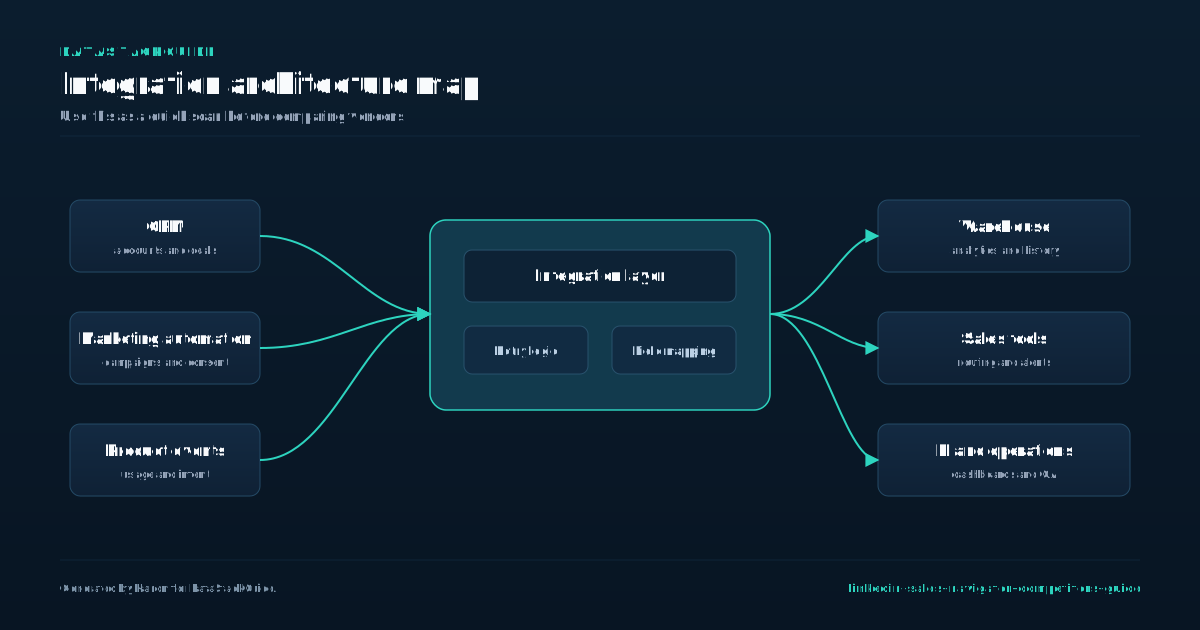
When evaluating competitors for contact data against LinkedIn Sales Navigator, the core tradeoff is between breadth of coverage and depth of intent signals. Apollo. io offers a massive database with built-in engagement tools, often at a fraction of Sales Navigator's cost, but its contact accuracy can degrade for niche roles or small companies.
- ZoomInfo provides firmographic and technographic data that Sales Navigator lacks, making it stronger for account-based targeting, yet its pricing typically starts higher and scales with seat count.
- LeadIQ and Salesloft focus on capturing data from your own prospecting workflow rather than supplying a pre-built database, which reduces data freshness issues but requires you to already have a list of target accounts.
- A common mistake is choosing Apollo solely for its low price without testing data quality for your specific vertical.
Conversely, a startup targeting early-stage tech firms might waste money on ZoomInfo's broad coverage when Apollo's cheaper plan covers the same accounts with acceptable accuracy. Your decision rule should match the tool to your primary use case.
If you need bulk contact exports for cold outreach, Apollo or ZoomInfo are better fits than LeadIQ, which requires manual sequence triggers. If your team relies on real-time intent data from LinkedIn activity, Sales Navigator remains the only option with native profile views and job change alerts.
Always run a side-by-side accuracy audit on 100 target contacts before committing to any alternative.
Competitors for Sales Engagement
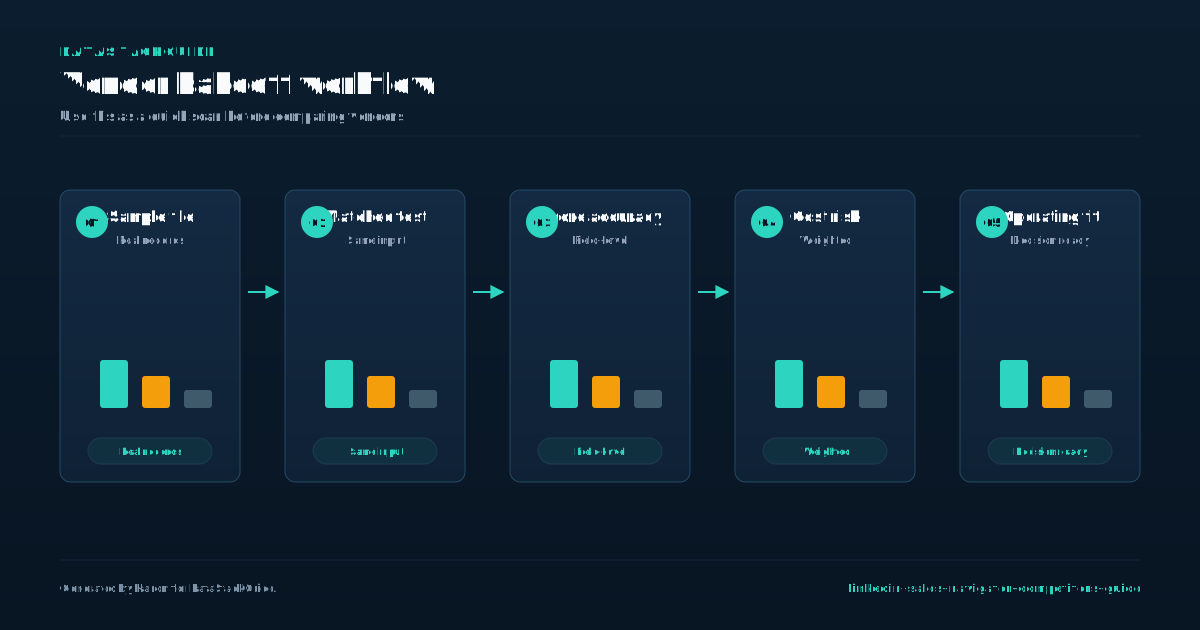
Sales engagement tools that compete with LinkedIn Sales Navigator fall into two camps: those that layer on top of Sales Navigator and those that try to replace it entirely. Apollo, ZoomInfo, LeadIQ, and Salesloft each take a different approach, and the right choice depends on whether your team needs prospecting data, sequence automation, or both.
- A common mistake is assuming a single tool can do everything.
- Apollo combines a large contact database with email sequences, but its data quality is inconsistent compared to ZoomInfo's verified records.
- ZoomInfo's pricing page shows enterprise-level costs that often exceed Sales Navigator's Business plan, making it a poor fit for small teams.
LeadIQ works as a Sales Navigator add-on to capture profiles and automate outreach, which keeps costs low but limits independent prospecting. Salesloft focuses on orchestration and cadence management, not data sourcing, so you still need a separate data provider. The tradeoff is between data breadth and workflow depth.
If your team spends most of its time finding new accounts, ZoomInfo or Apollo offer larger addressable markets than Sales Navigator alone. If your priority is moving leads through sequences, Salesloft or LeadIQ paired with Sales Navigator gives better control over timing and personalization.
Avoid the trap of buying a sales engagement platform before you have clean data,without reliable contact information, automation only accelerates mistakes. Test Apollo's free tier against a small list of target accounts to compare match rates before committing.
Competitors for Account Intelligence
When evaluating account intelligence tools, the core tradeoff is between data breadth and signal accuracy. A common mistake is assuming Apollo's lower price means equivalent coverage of decision-maker changes or funding events. If your team needs to track a specific account's org chart shifts weekly, Sales Navigator's native updates are more reliable.
- If you need broad prospecting lists for cold outreach, Apollo's larger database often wins on volume.
- ZoomInfo and LeadIQ solve different parts of the account intelligence problem.
- The decision rule here is simple: if your sales process depends on contacting the right person at the right time, ZoomInfo's verified contact data reduces bounce rates.
If your reps already spend hours on LinkedIn, LeadIQ's one-click capture saves time without adding another data source. Salesloft sits in a different category because it is a sales engagement platform that includes account intelligence as a feature, not a standalone tool.
The practical tradeoff is that Salesloft gives you sequence automation and cadence analytics alongside account data, but you lose the depth of LinkedIn's native signals.
If your team already uses a CRM and just needs better account data, a dedicated tool like Sales Navigator or ZoomInfo will outperform a platform that bundles intelligence as an add-on. If you are building a full sales workflow from scratch, Salesloft's integration may reduce tool sprawl at the cost of data fidelity.
When Apollo Can Replace Part of Sales Navigator
Apollo can replace part of Sales Navigator when your priority shifts from prospecting volume to data enrichment and outreach automation. Sales Navigator excels at deep social selling filters,like targeting decision-makers by years in role or group membership,but Apollo bundles contact data, email verification, and sequenced messaging into one platform.
- If your team spends more time cleaning lists and sending cold emails than refining Boolean searches, Apollo's unified workflow cuts tool-switching costs.
- A common mistake is assuming Apollo's larger database makes it a direct substitute for LinkedIn's intent signals.
- Apollo shows who visited your website or opened an email, but it cannot replicate Sales Navigator's real-time job change alerts or TeamLink warm introductions.
The decision rule: use Apollo when your sales process depends on high-volume outbound with automated follow-ups, not when you need to nurture existing relationships through LinkedIn's native network. But an enterprise team hunting 50 strategic accounts with complex buying committees still needs Sales Navigator's account-based filters and CRM sync.
ZoomInfo and LeadIQ offer similar data layers, but Apollo's built-in email sequences and A/B testing make it the strongest alternative for teams that prioritize speed over precision. Compare total cost: Apollo's all-in-one pricing versus Sales Navigator plus a separate sales engagement tool like Salesloft.
If your monthly outbound volume exceeds high-volume outbound, Apollo's flat-rate plan beats per-credit models.
When ZoomInfo or LeadIQ Makes More Sense
When ZoomInfo or LeadIQ Makes More Sense If your team spends more time verifying contact data than actually reaching out, ZoomInfo may be a better fit than Sales Navigator. LinkedIn's platform gives you profile access and InMail, but it does not guarantee phone numbers or direct emails.
- ZoomInfo's core strength is its B2B contact database, which includes verified work emails and mobile numbers.
- For a sales development rep who needs to call into procurement or IT departments, ZoomInfo's data completeness often beats Sales Navigator's reliance on LinkedIn messages.
- The tradeoff is cost: ZoomInfo's annual contracts typically start higher than Sales Navigator's monthly plans, so it only makes sense if your team sends more than 50 cold emails per rep per day.
LeadIQ solves a different problem: it speeds up how you capture and log prospect data from LinkedIn into your CRM. It works as a browser extension that pulls profile details into your CRM with one click.
This makes LeadIQ a better choice for teams that already have a data source (like ZoomInfo or Sales Navigator) but need to reduce admin work. The mistake is buying LeadIQ as a primary data source,it enriches what you find, it does not generate new leads from scratch.
A practical decision rule: if your biggest bottleneck is finding accurate phone numbers and emails, choose ZoomInfo. If your bottleneck is logging and sequencing outreach, choose LeadIQ. If you need both prospecting and workflow speed, consider pairing Sales Navigator with LeadIQ, but watch the total cost. Apollo.
io tries to combine data and sequencing in one tool, but its contact accuracy varies by industry,test it on 50 accounts in your vertical before committing. The key is matching the tool to the specific friction in your pipeline, not to a feature list.
How to Choose the Right Competitor
Start by mapping your core use case to the data source each tool relies on. Apollo and ZoomInfo pull from large B2B databases, so they work best when you need to find net-new contacts outside your existing network.
- LeadIQ and Salesloft, by contrast, sit on top of your CRM and capture intent signals from your own pipeline.
- If your team spends most of its time prospecting into cold accounts, Apollo or ZoomInfo will give you the volume you need.
- If your focus is on warming up leads already in your system, LeadIQ or Salesloft will save you from paying for data you already own.
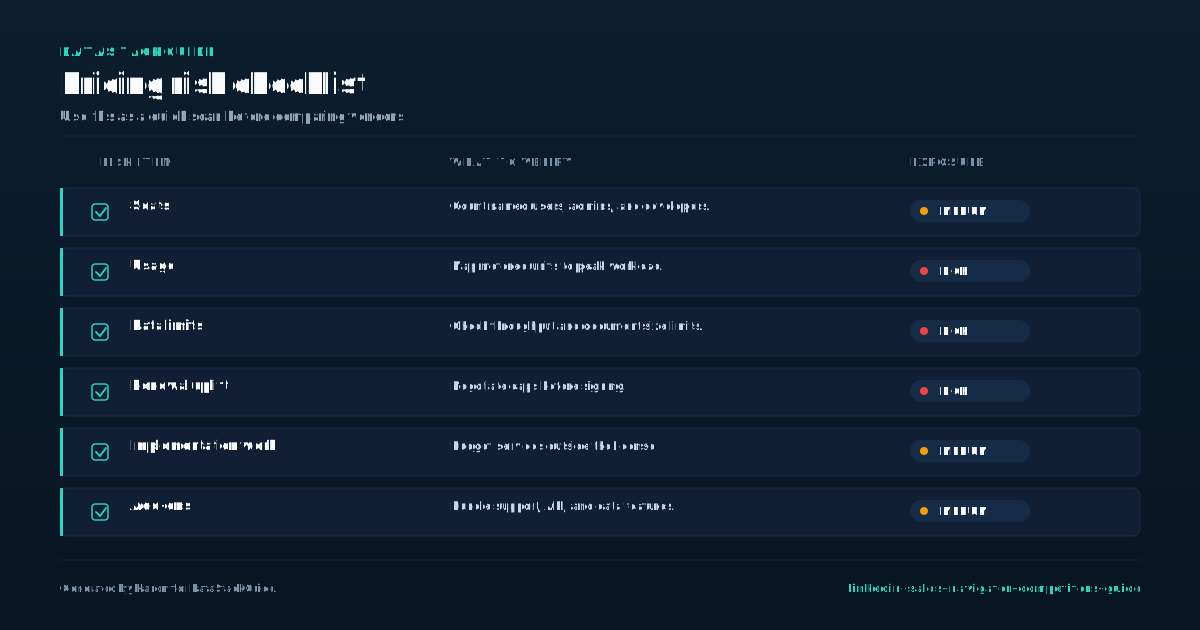
Pricing structure is the second decision rule. LinkedIn Sales Navigator charges per seat with no usage caps, which suits teams that prospect heavily within LinkedIn's walled garden. Apollo offers a flat monthly fee for unlimited exports, making it cheaper for high-volume users who don't need LinkedIn's native search filters.
ZoomInfo and Salesloft both price by contract size and often require annual commitments, so they fit larger teams with stable headcounts. A common mistake is choosing a tool based on per-user price alone while ignoring export limits. Finally, test the integration depth with your existing stack.
Salesloft and LeadIQ both offer native Salesforce syncs that update activity logs automatically, which reduces manual data entry. ZoomInfo's Chrome extension works inside LinkedIn but requires a separate data license. Apollo's built-in email sequencing can replace a separate outreach tool, but that bundling makes it harder to swap out later.
The tradeoff is clear: a tool that does everything may lock you into a single vendor, while a point solution gives you flexibility at the cost of more integrations to manage.
Tools Mentioned in This Guide
Related Categories
Sources
Frequently Asked Questions
What is the best LinkedIn Sales Navigator competitor?
The best LinkedIn Sales Navigator competitor depends on your needs. For budget, Apollo. io offers strong lead data and email sequencing at a lower cost. For intent data and account targeting, ZoomInfo is superior.
For direct LinkedIn integration with lower pricing, consider Lusha or Kaspr. Apollo is the top all around alternative for most teams.
Can Apollo replace LinkedIn Sales Navigator?
Apollo can partially replace LinkedIn Sales Navigator for prospecting, but not entirely. Apollo offers strong contact data, email finding, and sequencing tools at a lower cost.
However, Sales Navigator provides superior LinkedIn native search filters, real time intent signals, and direct InMail integration. Apollo works best for outbound email campaigns, while Sales Navigator excels for social selling and account research within LinkedIn.
Many sales teams use both tools together.
Is ZoomInfo better than Sales Navigator?
ZoomInfo and Sales Navigator serve different primary functions. ZoomInfo excels at B2B contact and company data with direct emails and phone numbers, making it stronger for outbound prospecting.
Sales Navigator is better for social selling within LinkedIn, offering real-time updates and relationship mapping. ZoomInfo is generally more expensive. Choose ZoomInfo for direct contact data; choose Sales Navigator for LinkedIn based engagement and lead list building.
Do teams need both Sales Navigator and a database?
Teams typically do not need both. Sales Navigator excels at finding decision makers within target accounts and monitoring buying signals. A database like Apollo or ZoomInfo provides broader company and contact data, often with verified emails and phones.
If your team focuses on account based selling, Sales Navigator alone may suffice. For high volume outbound prospecting, a database is more efficient. Combining both is redundant unless you need Navigator's real time intent data alongside a database's bulk enrichment.
What should I compare against LinkedIn Sales Navigator?
LinkedIn Sales Navigator competitors are alternative sales intelligence and prospecting tools that offer similar or enhanced features for lead generation and outreach. Key alternatives include Apollo.
io, which provides integrated data and engagement tools, ZoomInfo for B2B contact data, Lusha for direct contact details, and LeadIQ for workflow automation.
These platforms often offer better pricing, more accurate data, or additional features like email sequencing compared to Sales Navigator.